
| In Nevada, for a time, the lawyer, the editor, the banker, the chief desperado,
the chief gambler, and the saloon-keeper, occupied the same level in society,
and it was the highest. The cheapest and easiest way to become an influential
man and be looked up to by the community at large, was to stand behind a
bar, wear a cluster-diamond pin, and sell whisky. I am not sure but that
the saloon-keeper held a shade higher rank than any other member of society.
His opinion had weight. It was his privilege to say how the elections should
go. No great movement could succeed without the countenance and direction
of the saloon-keepers. It was a high favor when the chief saloon-keeper
consented to serve in the legislature or the board of aldermen. Youthful
ambition hardly aspired so much to the honors of the law, or the army and
navy as to the dignity of proprietorship in a saloon. To be a saloon-keeper
and kill a man was to be illustrious. - Roughing It |
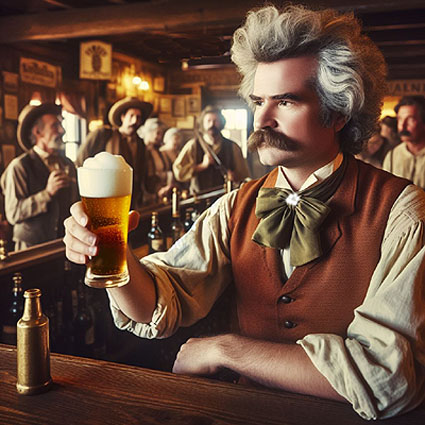 AI image created by R. Kent Rasmussen |
| Then everybody traveled by steamboat, everybody
drank, and everybody treated everybody else. "Now most everybody goes
by railroad, and the rest don't drink." In the old times the barkeeper
owned the bar himself, "and was gay and smarty and talky and all jeweled
up, and was the toniest aristocrat on the boat; used to make $2,000 on a
trip. A father who left his son a steamboat bar, left him a fortune. Now
he leaves him board and lodging; yes, and washing, if a shirt a trip will
do. Yes, indeedy, times are changed. Why, do you know, on the principal
line of boats on the Upper Mississippi, they don't have any bar at all!
Sounds like poetry, but it's the petrified truth." - Life on the Mississippi |
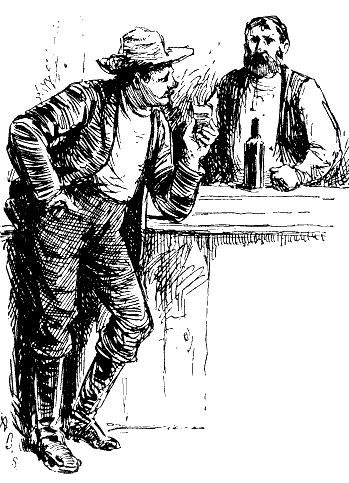 Illustration from first edition of LIFE ON THE MISSISSIPPI |

Quotations | Newspaper Articles | Special Features | Links | Search